
Criminal Court Cases in Greensville County
Greensville County criminal cases begin in the court that has power over the charge and the stage. The Greensville General District Court hears misdemeanors and traffic offenses. It also handles bond matters, advisements, and preliminary hearings in felony cases. The Greensville Juvenile and Domestic Relations District Court has juvenile and certain adult domestic jurisdiction, but juvenile case information is confidential and excluded from the public online search. A district felony docket may end with the word “certified.” That means the charge moved onward after a probable-cause finding or waiver. It does not mean the person was convicted.
The Greensville Circuit Court, part of Virginia's Sixth Judicial Circuit, receives felony cases after certification or indictment. Its clerk keeps felony trial records, indictments once publicly filed, pleas, final dispositions, sentences, and appeals from district court. One incident can thus produce a General District case number and a different Circuit Court number. Search both court levels before treating a result as complete. The arrest report and regional jail entry remain separate records, even when they refer to the same event.
Greensville County's Two Criminal Courts
The local felony path runs between two nearby clerks in Emporia. Emporia is an independent city, but it is still the Greensville County seat and location of the county courts. The Combined District Court is at 315 South Main Street. Its clerk can address misdemeanor files, traffic cases, bond events, and the district phase of a felony. The Circuit Court clerk is at 337 South Main Street and maintains the later record-court phase. Asking the Circuit clerk for a misdemeanor that never left district court sends the request to the wrong custodian.
The split also explains gaps between search results. A prosecutor may amend a charge. A grand jury may return an indictment framed differently from the booking charge. The Circuit docket will then tell a later and more complete part of the case than the General District screen. For a compact reference, compare these roles before calling:
| Court | Greensville County role | Clerk contact |
|---|---|---|
| General District | Misdemeanors, traffic, bond, advisements, felony preliminaries | 315 S. Main St., Emporia; 434-634-5400 |
| Circuit Court | Felony indictments, trials, sentencing, appeals, certified copies | 337 S. Main St., Emporia; 434-348-4215 |
| J&DR District | Juvenile and specified domestic matters; juvenile data is not online | 315 S. Main St., Emporia; 434-634-5400 |
Note: The two clerk offices are in Emporia, but their Greensville County case records remain county court records.
Greensville County Case Record Searches
Begin with the Virginia Online Case Information System statewide search. Accept its terms, select the proper locality and court, and use a known court number when possible. The separate General District case search is useful when the matter began at that level. Virginia's official case-search instructions explain that Circuit Court coverage is limited to participating courts. The participating Circuit Court interface provides the direct court-selection route. A negative statewide result is a cue to contact the clerk, not proof that no file exists.
- Choose Greensville General District or Greensville Circuit Court based on the charge and stage.
- Select name, case-number, or hearing-date mode. Use the exact court number when it is known.
- For a name search, enter the legal surname and first name. Add the middle name to narrow common matches.
- Compare court, charge, offense date, hearing data, status, and disposition before deciding that a result is the right case.
- Ask the responsible clerk for the actual file, a plain copy, or a certified copy when docket shorthand is not enough.
The live form shown in the official statewide system source demonstrates why the locality and court choice matter.
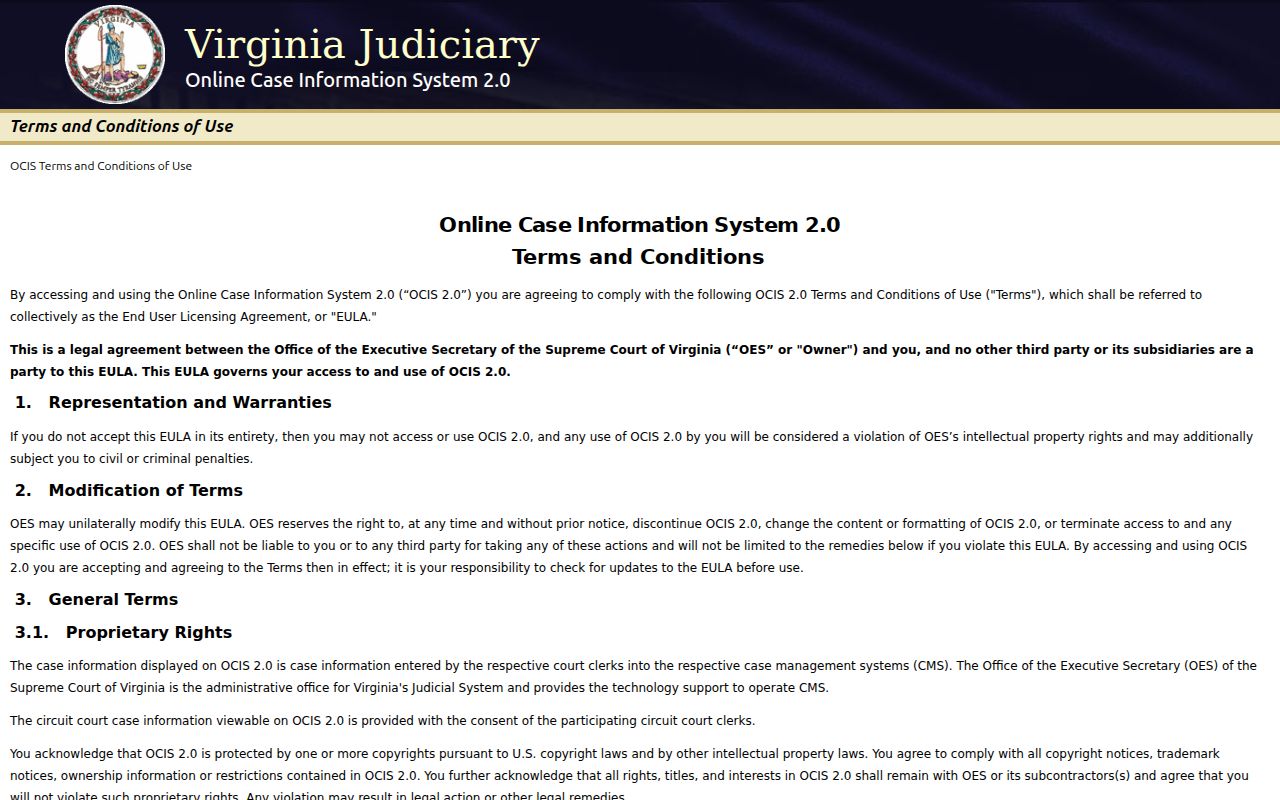
The screen opens the public index, while the Greensville County clerks remain the source for filed documents and certified proof.
| Field label | Type | Required | Use in Greensville County |
|---|---|---|---|
| Court/Locality | Dropdown | Yes | Choose Greensville General District or Circuit |
| Search Type | Tabs or radio | Yes | Name, Case Number, or Hearing Date |
| Last Name | Text | For name mode | Use legal surname |
| First/Middle Name | Text | First varies; middle optional | Narrow common-name results |
| Case Number | Text | For number mode | Enter the court-issued format |
| Hearing Date | Date | For date mode | Choose a docket date or range |
| Case Type | Filter | Varies | Select Criminal or Traffic as needed |
Greensville County OCIS Search Limits
OCIS is broad, but it is not a complete statewide Circuit Court index for all time. Its result page is also not the paper or electronic case file. Some pleadings are not downloadable. Protected identifying data, victim information, and full financial identifiers are suppressed. Juvenile matters do not appear. A sealed or expunged case is removed from ordinary public access under the controlling order and statute.
The official General District locality interface provides the direct route to Greensville County's lower-court index.
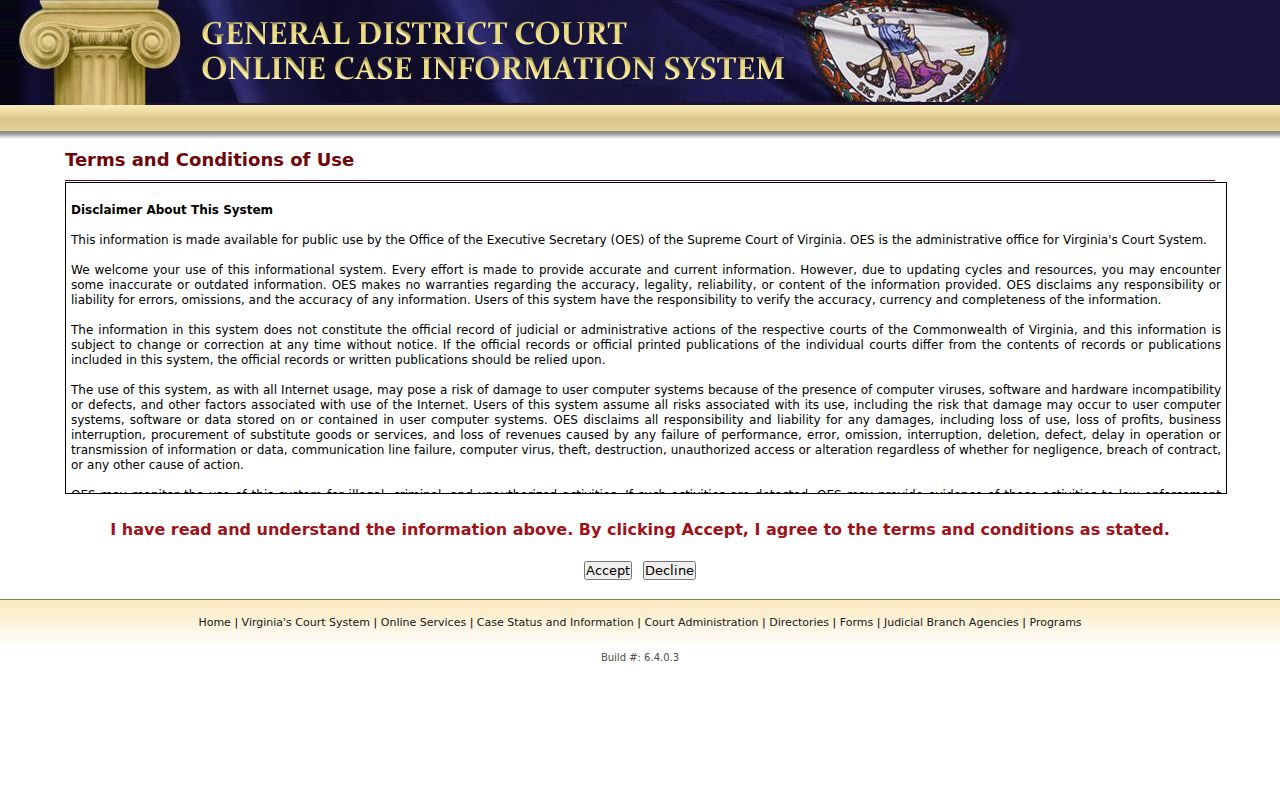
That locality screen is the right first stop for misdemeanors and felony preliminary proceedings, but later felony events can require a second Circuit Court search.
If an online docket has no documents, write down the court name and case number, then ask the clerk what portions are open for inspection. The clerks' offices are open from 8:00 a.m. to 4:00 p.m. The research found no local online copy or certification fee schedule. Ask for the current price under Virginia Code § 17.1-275 before ordering. A public screen can support research, but only the clerk can issue a certified court copy.
What a Criminal Case File Contains
A Greensville County case file is organized around the court's handling of each charge. It is richer than a booking record or VSP history because it can show the filed accusation, appearances, motions, rulings, pleas, and judgment. The public docket may summarize these events without attaching each document. Match the case number and court first, then follow the entries in date order.
| Case Number & Court | Identifies the specific General District or Circuit proceeding and its local file. |
|---|---|
| Charging Document | Shows the complaint, warrant, or indictment and the offense alleged in that stage. |
| Docket Entries | Lists filed events, appearances, continuances, motions, and court actions by date. |
| Hearing Dates | Shows scheduled times, hearing types, and changes entered by the clerk. |
| Disposition & Judgment | Records outcomes such as conviction, dismissal, acquittal, or nolle prosequi. |
| Sentence & Conditions | May state jail time, suspended time, probation, costs, restitution, or other orders. |
Do not substitute a VSP rap sheet for the file. The VSP record groups fingerprint-supported arrest cycles and reported dispositions. It does not reproduce every Greensville County pleading or docket event. Likewise, the Meherrin River Regional Jail record describes custody and the charge used at booking, which may differ from the filed or amended court charge.
Greensville County Docket Status Terms
Three words cause many Greensville County court lookup errors: certified, indicted, and convicted. Certification is a district-stage transfer after a probable-cause finding or waiver. An indictment is a grand jury's formal felony accusation. A conviction is a judgment of guilt after a plea or trial. The first two are procedural steps, not guilty findings. “Nolle prosequi” means the prosecutor chose not to proceed at that time. It is not the same as an acquittal, and it can have different consequences from a dismissal.
- Preliminary hearing
- General District review of probable cause before a felony may proceed to Circuit Court.
- Certification
- Transfer of a felony charge to Circuit Court after a finding or waiver, not a conviction.
- True bill
- The grand jury returned an indictment.
- Nolle prosequi
- The prosecutor declined to continue the charge at that time.
- Disposition
- The outcome the court entered for a charge.
A dismissed or nolle prossed matter does not vanish merely because the result favors the accused. Virginia expungement or sealing law must apply before ordinary public visibility changes.
Criminal Case Stages in Greensville County
A misdemeanor can remain in General District Court through trial and disposition. A felony takes a longer route. After arrest or summons, the magistrate and district court address advisement and bond. Counsel is addressed at the first appearance; the Virginia Indigent Defense Commission office directory is the official statewide reference for public-defense offices, while the trial court handles appointment in the case. The district judge then holds a preliminary hearing unless it is waived. If the charge moves forward, the Circuit Court phase can include a grand jury, arraignment, motions, plea or trial, sentence, and a possible appeal.
Case flow: Charges Filed › Arraignment › Pretrial › Plea or Trial › Disposition › Sentencing
The online record may show only terse entries for those steps. Dates can change, charges can be amended, and separate charge counts can receive separate outcomes. Read each count rather than relying on the overall case caption. For a felony, compare the district record with the later Circuit record so that an early charge is not mistaken for the final accusation.
Greensville County Criminal Docket Rhythm
Greensville General District Court schedules advisements and bond hearings at 8:30 a.m. Monday through Thursday. Criminal dockets are held Monday and Tuesday, while protracted criminal matters are set Friday. This schedule helps explain why a fresh booking may appear before a full court entry is easy to locate. The clerk also states that continuance requests must be faxed, not emailed. A searcher should never assume an email changed a court date.
Greensville Circuit Court terms begin on the first Friday in February, April, June, August, October, and December. Grand juries meet on the first day of term, and criminal court normally convenes at 9:00 a.m. The Circuit Court's public page also links a portable-electronic-device policy. Check it before bringing a phone or recording gear to inspect a file. These local rules matter because online case information does not replace direct compliance with a court notice.
Access Rules for Case Records
Virginia Code § 17.1-208 generally opens nonconfidential Circuit Court clerk records to office inspection and copying for a reasonable fee. District court access is governed by § 16.1-69.54:1, subject to other confidentiality laws. Neither provision opens juvenile files, sealed cases, protected victim or minor data, or identifiers barred from public release. Online redactions can also be stricter than what a qualified requester may inspect at the counter.
The Virginia expungement chapter covers qualifying police and court records, while Chapter 23.2 creates a separate sealing regime. The current expungement source illustrates that a favorable result alone is not an order:
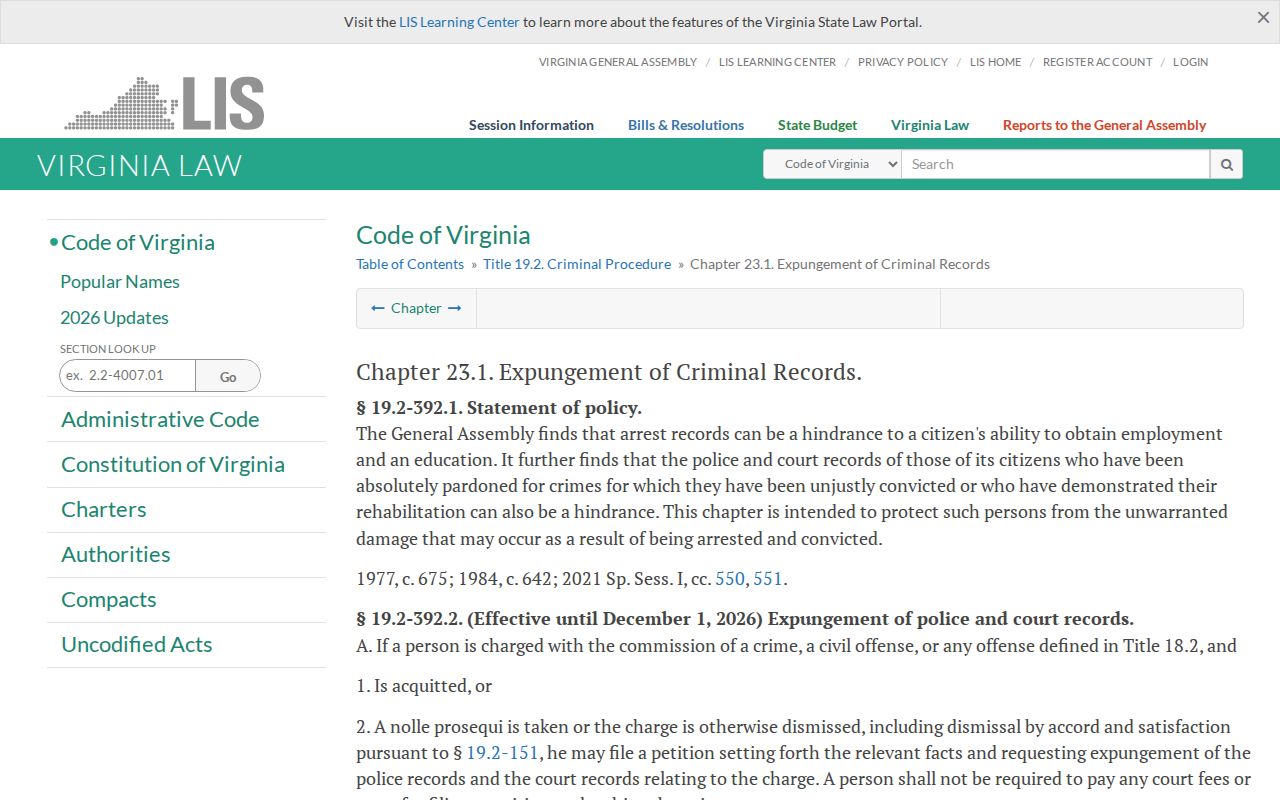
The Greensville County Circuit clerk is the local starting point for a petition tied to a qualifying county charge, but the live law on the filing date controls eligibility and procedure.
The newer Virginia sealing provisions address automatic and petition-based paths on phased effective dates.
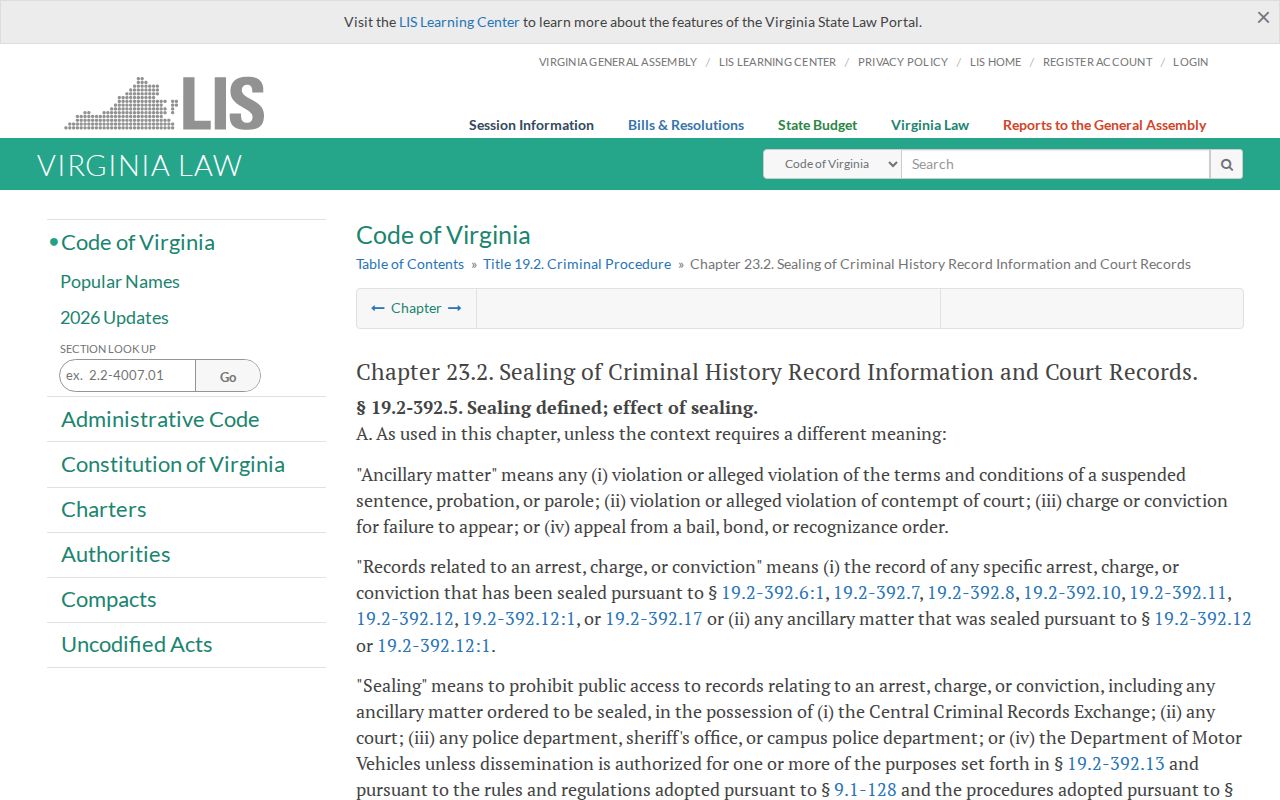
Because effective dates have changed, confirm the current text before drawing a conclusion from an older Greensville County docket.
Archived Greensville County Criminal Cases
Greensville County court research reaches far beyond the online index. The Library of Virginia's Greensville inventory lists local court order books back to 1781. Older files may be archived or available on microfilm, so a blank portal result is especially weak evidence in genealogical or historical work. Start with the clerk that would have held the case, give the best date range and party name available, and ask whether the material has moved to an archive.
Federal criminal dockets follow another path. Greensville County lies in the U.S. District Court for the Eastern District of Virginia, and federal filings are searched through PACER after account registration. They do not appear in the Virginia General District or Circuit systems.
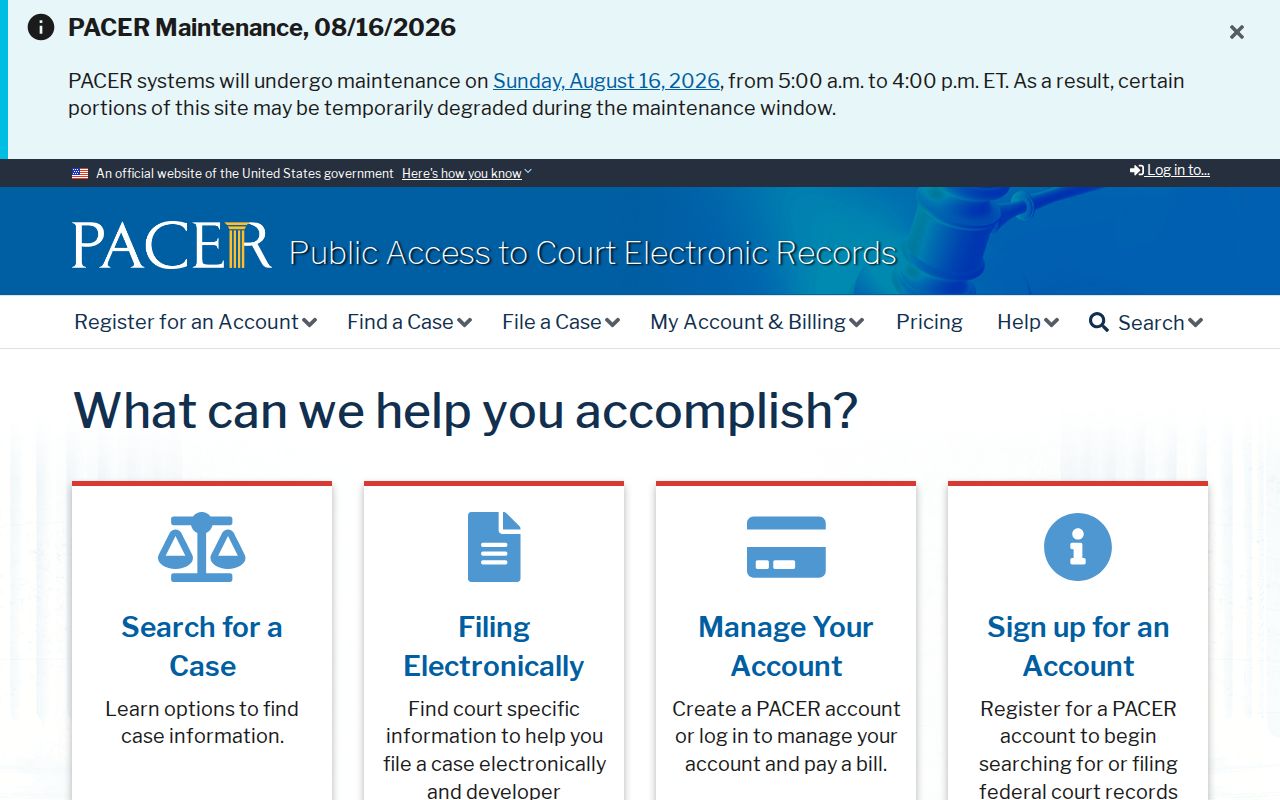
PACER is useful only for federal matters; the Greensville County clerks remain the custodians of local and Virginia trial-court files.